
 English
 Türkçe
 Русский
 Español
 Français
 Deutsch
 한국어
한국어
 中文
中文
 Italiano
 日本語
日本語
 Português
Why Gobeklitepe Is Changing Human History

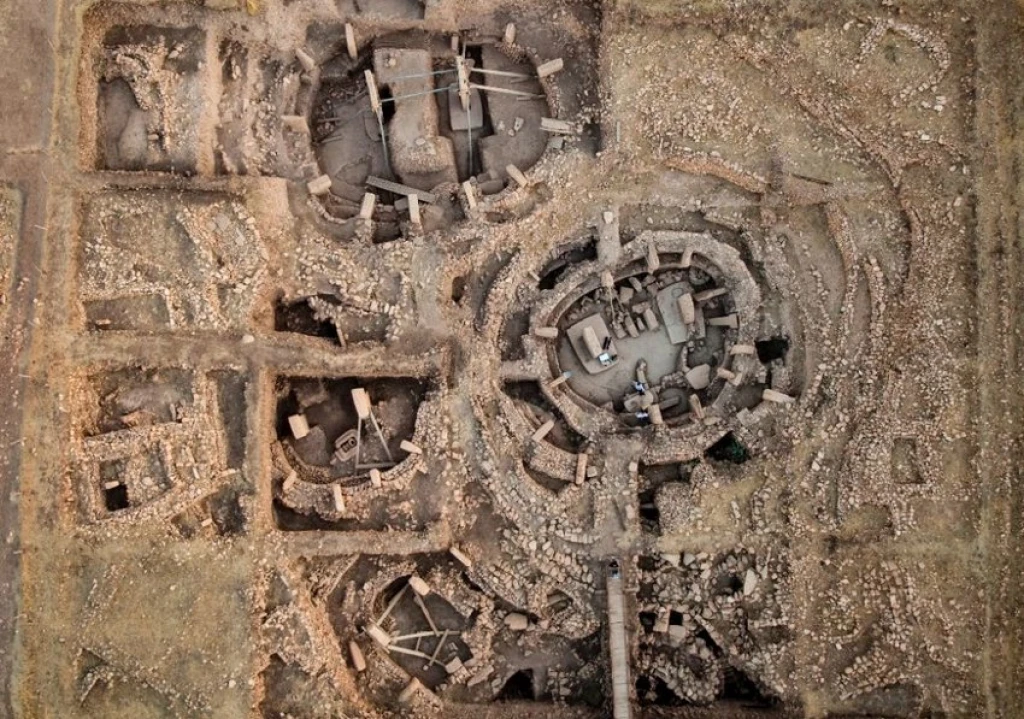
For centuries, historians believed that human civilization followed a simple path: people settled down, started farming, built villages, and then created temples and religions.
But the discovery of Gobeklitepe in southeastern Turkey changed that story completely.
Today, it is considered one of the most important archaeological discoveries in the world — not because of its size, but because of what it reveals about the origins of human society.
An Archaeological Discovery That Shocked the World
Göbeklitepe dates back to around 9600 BC, more than 11,000 years ago.
This makes it:
- Older than the Egyptian pyramids
- Older than Stonehenge
- Built before writing
- Built before metal tools
- Built before pottery
At that time, humans were believed to be simple hunter-gatherers. Yet they built massive stone structures arranged in circular enclosures.
This discovery forced historians to rethink the timeline of civilization.
The Old Theory of Civilization
Before Göbeklitepe was discovered, the common belief was:
- Humans became farmers
- Farming created permanent settlements
- Villages grew into cities
- Organized religion and temples appeared later
In short, agriculture came first, religion came later.
The New Theory After Göbeklitepe
Göbeklitepe suggests the opposite.
Archaeologists now believe:
- People gathered at ritual sites
- Large groups required stable food sources
- Agriculture developed to support these gatherings
In other words:
Religion and social organization may have come before farming.
This is a revolutionary idea.
Built by Hunter-Gatherers
What makes Göbeklitepe even more surprising is who built it.
The builders:
- Had no metal tools
- Had no written language
- Did not live in cities
- Were likely hunter-gatherers
Yet they carved massive T-shaped stone pillars, some weighing up to 20 tons, and decorated them with detailed animal reliefs.
This shows that early humans were more organized and capable than previously believed.
A Place of Ritual, Not Daily Life
Unlike later ancient cities, Göbeklitepe shows no signs of houses or daily life.
Instead, archaeologists found:
- Circular stone enclosures
- Symbolic carvings
- Animal figures
- Central pillars representing human forms
This suggests the site was used for ritual or spiritual gatherings, not as a settlement.
The Beginning of Organized Belief
Many researchers believe Göbeklitepe represents:
- The earliest known temple complex
- The first large-scale ritual center
- The beginning of organized belief systems
If true, this means:
Human spirituality may have been the driving force behind the first communities.
Part of a Larger Cultural Region
Göbeklitepe is not alone.
It is part of a wider archaeological zone in southeastern Turkey known as Taş Tepeler (Stone Hills), which includes sites like:
- Karahantepe
- Sefertepe
- Sayburç
- Harbetsuvan
These sites show that early ritual culture was widespread in the region.
Why It Matters Today
Göbeklitepe is important because it:
- Challenges traditional theories of civilization
- Shows complex societies existed earlier than thought
- Suggests religion played a key role in human cooperation
- Rewrites the origins of social organization
It’s not just an ancient site — it’s a turning point in human history.
Final Thoughts
Göbeklitepe forces us to ask new questions:
- What motivated early humans to build monuments?
- Did belief systems create communities?
- Did religion lead to agriculture and cities?
While many mysteries remain, one thing is clear:
Göbeklitepe is changing the story of human civilization.
Discover the Origins of Civilization
At Bien Cappadocia Travel, we organize private and cultural tours to Göbeklitepe and the ancient sites of southeastern Turkey, offering expert guides and comfortable travel experiences.