
 English
 Türkçe
 Русский
 Español
 Français
 Deutsch
 한국어
한국어
 中文
中文
 Italiano
 日本語
日本語
 Português
Turkey Food and History Route: From Istanbul to Gaziantep and Göbekli Tepe

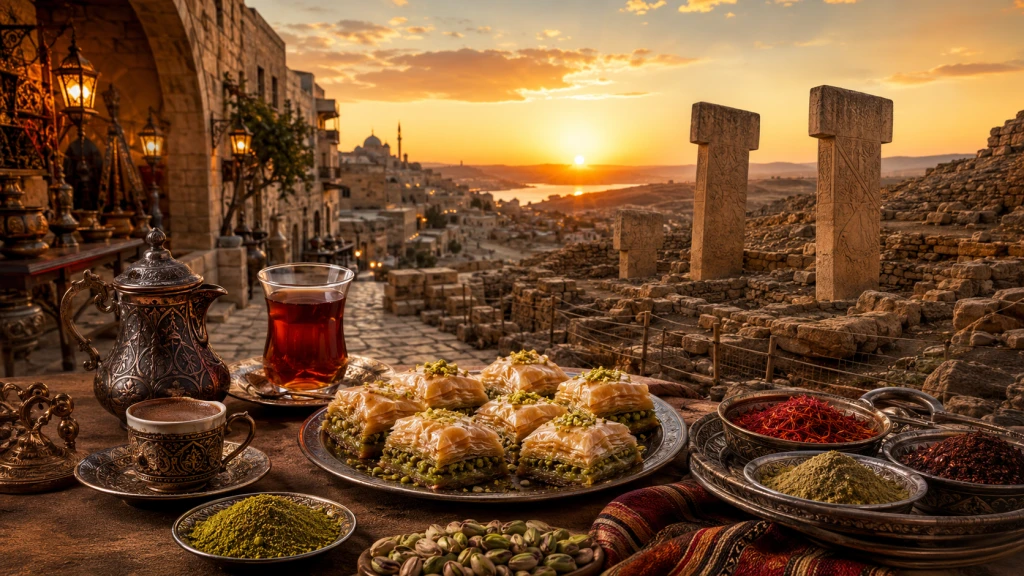
Some journeys are built around famous landmarks.
Others are built around feeling the soul of a country.
A private food and history route through Turkey does both.
From Istanbul’s imperial kitchens and historic bazaars to Gaziantep’s legendary culinary culture and Göbekli Tepe’s ancient mystery, this journey connects two of Turkey’s greatest strengths: flavor and history.
It is a route for travelers who want more than standard sightseeing. You do not simply visit monuments. You taste regional dishes, walk through old markets, explore ancient sites, meet local traditions, and understand how deeply food, culture, and history are connected in Turkey.
This is not an ordinary Turkey itinerary.
It is a private journey from the Bosphorus to Mesopotamia — from Ottoman palaces and spice markets to pistachio baklava, sacred Şanlıurfa, and one of the world’s most important archaeological sites.
Why Combine Food and History in Turkey?
Turkey is one of the rare countries where food and history naturally belong together.
Every region has its own table. Every city has its own ingredients, cooking style, stories, and traditions. The food changes as the landscape changes. The flavors of Istanbul are different from Cappadocia. Gaziantep is different from Şanlıurfa. The Aegean is different from southeastern Anatolia.
That is what makes a Turkey food and history route so special.
You are not only eating Turkish food.
You are tasting the geography, trade routes, migrations, empires, family traditions, and local identity behind it.
In Istanbul, food reflects imperial history, migration, the Bosphorus, markets, and centuries of cultural exchange.
In Gaziantep, cuisine becomes a city identity. Gaziantep is recognized by UNESCO as a Creative City of Gastronomy, making it one of the most important food destinations in Turkey.
In Şanlıurfa and Göbekli Tepe, history reaches far deeper. Göbekli Tepe’s monumental structures date to the Pre-Pottery Neolithic period, around 9600–8200 BCE, according to UNESCO.
Together, these places create a journey that feels rich, emotional, and deeply meaningful.
Start in Istanbul: Where Empires Meet the Table
A food and history journey through Turkey should begin in Istanbul.
Istanbul is not only Turkey’s most famous city. It is one of the great cultural crossroads of the world. For centuries, it connected continents, empires, religions, trade routes, and cuisines.
The city gives travelers the perfect introduction to Turkey’s layered identity.
You can begin in the historic heart of Istanbul, where Hagia Sophia, the Blue Mosque, Topkapi Palace, the Hippodrome, and the Grand Bazaar tell the story of Byzantine and Ottoman power.
But the food tells another story.
Ottoman palace cuisine, street food, seafood, Turkish coffee, baklava, simit, meze, spices, and local markets all show how deeply food is connected to daily life in Istanbul.
This is why a private Istanbul experience should never feel like a simple checklist.
The best first day combines history with flavor.
You might visit Topkapi Palace and then understand how the Ottoman imperial kitchen shaped food culture. You might walk through the Spice Bazaar and discover the aromas of saffron, sumac, dried fruits, Turkish delight, coffee, and herbal teas. You might cross the Bosphorus and feel how Europe and Asia shape the city’s rhythm.
Istanbul prepares you for the rest of the journey.
It teaches you that in Turkey, history is not only inside museums.
It is also on the table.
The Spice Bazaar: Istanbul’s Gateway to Flavor
For food lovers, the Spice Bazaar is one of Istanbul’s most atmospheric stops.
It is colorful, fragrant, energetic, and deeply connected to the city’s trading past. While the Grand Bazaar is famous for carpets, jewelry, ceramics, and crafts, the Spice Bazaar speaks directly to the senses.
Here, you find Turkish delight, dried figs, pistachios, spices, teas, coffee, nuts, and local sweets.
With a private guide, the experience becomes much more useful and enjoyable. You can learn what to buy, how to recognize quality, and which products are truly worth taking home.
This matters because Istanbul’s markets can feel overwhelming for first-time visitors.
A good guide helps you move beyond tourist displays and understand what locals actually value.
For a food and history route, the Spice Bazaar is more than a shopping stop.
It is the first taste of Turkey’s culinary depth.
From Istanbul to Southeastern Turkey
After Istanbul, the journey becomes deeper, warmer, and more regional.
Southeastern Turkey has a completely different feeling from Istanbul.
The landscapes change. The architecture changes. The flavors become bolder. The streets feel older. The connection between food, faith, trade, and ancient history becomes stronger.
This part of Turkey is especially powerful for travelers who want originality.
Many visitors only see Istanbul and Cappadocia. Those are beautiful and essential destinations. But southeastern Turkey gives a different kind of memory.
It gives you ancient Mesopotamian landscapes, living bazaars, sacred sites, family food traditions, old stone streets, local craftsmanship, and some of the best cuisine in the country.
A private route allows you to experience this region with comfort and confidence.
Instead of worrying about logistics, distances, local timing, or language, you can focus on the journey itself.
Gaziantep: Turkey’s Culinary Capital
Gaziantep is one of the strongest food destinations in Turkey.
For many travelers, it becomes the most delicious surprise of the trip.
The city is famous for pistachios, baklava, kebabs, spices, copper bazaars, local stews, breakfast culture, and deeply rooted culinary traditions. Food here is not treated as entertainment. It is identity.
Gaziantep’s cuisine has been shaped by geography, history, trade routes, agricultural richness, and family knowledge passed down through generations.
This is why the city deserves more than a quick lunch stop.
A private Gaziantep experience can include traditional restaurants, local markets, baklava tasting, copper workshops, spice shops, and cultural sites that give the city more depth.
You do not simply eat baklava.
You understand why Gaziantep baklava is famous.
You do not simply walk through a bazaar.
You feel how food, craft, and commerce are woven into daily life.
Gaziantep is where Turkey’s culinary reputation becomes real.
What to Taste in Gaziantep
A private food route in Gaziantep should be generous but well-paced.
The city has so many specialties that trying everything in one sitting would be impossible. The goal is not to overload the day. The goal is to taste the right things with context.
Gaziantep is especially known for:
Pistachio baklava.
Regional kebabs.
Beyran soup.
Katmer.
Lahmacun.
Yuvalama.
Ali nazik.
Spices, dried peppers, and local mezes.
Fresh pistachios and pistachio-based desserts.
The exact tasting route can change depending on the season, opening hours, and your preferences. That is one of the advantages of private planning.
If you love desserts, the day can focus more on baklava and katmer.
If you love savory food, the route can lean toward kebabs, soups, and local stews.
If you enjoy markets, more time can be spent in bazaars and spice shops.
Gaziantep rewards curiosity.
Zeugma Mosaic Museum and the Historical Side of Gaziantep
Gaziantep is not only about food.
It is also home to one of Turkey’s most impressive museum experiences: the Zeugma Mosaic Museum.
The mosaics from the ancient city of Zeugma reveal the artistic richness of the region during the Roman period. Faces, mythological scenes, patterns, colors, and details bring the ancient world surprisingly close.
This is what makes Gaziantep ideal for a food and history route.
The morning may be full of flavors, markets, and local dishes.
The afternoon may take you into ancient art, Roman history, and archaeological storytelling.
That balance is powerful.
It shows that Gaziantep is not just a culinary stop. It is a cultural destination.
Şanlıurfa: Sacred Atmosphere and Living Tradition
From Gaziantep, the route continues to Şanlıurfa.
Şanlıurfa feels different immediately.
It is one of Turkey’s most atmospheric cities, known for sacred stories, old bazaars, traditional music, local food, stone architecture, and deep connections to ancient history.
The city is often associated with Prophet Abraham, and places such as Balıklıgöl, the Pool of Abraham, give Şanlıurfa a spiritual feeling that many travelers remember strongly.
The old bazaar area adds another layer.
Here, you can walk through narrow lanes, see traditional workshops, drink menengiç coffee, taste local flavors, and experience a more intimate side of southeastern Turkey.
Şanlıurfa is not polished in the same way as Istanbul.
That is part of its beauty.
It feels older, warmer, and more rooted.
For travelers who want Turkey beyond the ordinary, Şanlıurfa is a deeply rewarding stop.
What to Taste in Şanlıurfa
Şanlıurfa’s cuisine is bold, local, and full of character.
The city is famous for dishes that reflect southeastern Anatolia’s love of spices, grilled meats, wheat, peppers, herbs, and shared meals.
Some flavors and experiences to look for include:
Urfa kebab.
Çiğ köfte traditions.
Lahmacun.
Local breakfast items.
Ayran.
Menengiç coffee.
Regional desserts.
Spicy mezes and fresh herbs.
The food in Şanlıurfa feels connected to hospitality. Meals are not only about eating. They are about sitting, sharing, talking, and entering the rhythm of local life.
For guests interested in culture, Şanlıurfa’s food can be just as meaningful as its monuments.
Göbeklitepe: The Ancient Heart of the Route
The emotional high point of this journey is Göbeklitepe.
Located near Şanlıurfa, Göbekli Tepe is one of the most important archaeological sites in the world. UNESCO describes it as a site with monumental T-shaped pillars from the Pre-Pottery Neolithic period, offering insight into the beliefs and world of communities in Upper Mesopotamia around 11,500 years ago.
Visiting Göbekli Tepe changes the tone of the trip.
After Istanbul’s empires and Gaziantep’s culinary richness, Göbekli Tepe takes you much further back.
Before written history.
Before classical cities.
Before palaces and mosques.
Before the familiar world.
Standing there, you feel the scale of human history differently.
The site is not visually overwhelming in the same way as Ephesus or Istanbul’s monuments. Its power is quieter and deeper. It asks you to imagine people gathering, carving, building, and creating ritual spaces thousands of years before many of the civilizations travelers usually study.
This is why Göbekli Tepe belongs in a food and history route.
It reminds you that southeastern Turkey is not only a place of great flavors.
It is one of the landscapes where human culture began to take shape.
Why This Route Works So Well
This route works because each destination adds a different layer.
Istanbul gives you the imperial beginning: palaces, bazaars, mosques, the Bosphorus, and Ottoman culinary memory.
Gaziantep gives you the culinary heart: baklava, pistachios, markets, kebabs, spices, and living food culture.
Şanlıurfa gives you sacred atmosphere: old streets, local traditions, Balıklıgöl, bazaars, and southeastern hospitality.
Göbekli Tepe gives you ancient depth: one of the world’s most meaningful archaeological experiences.
Together, they create a journey that feels complete without being ordinary.
It is not just “Turkey highlights.”
It is Turkey through taste, memory, and time.
Who Is This Turkey Food and History Route Perfect For?
This private route is ideal for travelers who want a more original Turkey experience.
It is especially suitable for:
Food lovers who want to taste regional Turkish cuisine in the places where it belongs.
History lovers interested in ancient sites, archaeology, empires, and sacred landscapes.
Couples looking for a meaningful and unusual private journey.
Small groups who want a curated route beyond standard tourist programs.
Travelers who have already seen Istanbul and Cappadocia and want something deeper.
Luxury-minded guests who value private guiding, comfort, and smooth logistics.
Cultural travelers who enjoy markets, local traditions, storytelling, and authentic regional life.
This is not the best route for travelers who only want beaches or quick photo stops.
It is best for guests who are curious, open-minded, and ready to experience Turkey through both flavor and history.
Why Choose a Private Tour for This Route?
Southeastern Turkey is rich, rewarding, and deeply memorable — but it is also a region where planning matters.
Distances between cities, flight schedules, museum timing, local restaurant choices, and sightseeing flow all affect the experience. Without proper planning, the route can feel tiring or fragmented.
A private tour makes it smoother.
Your itinerary is designed around your pace. Your guide gives context at historical sites. Your meals can be selected carefully. Your transfers are handled. Your time in markets, museums, and archaeological sites can be balanced properly.
This is especially important for a food and history journey because the best moments often depend on timing.
The right restaurant at the right hour.
The right bazaar visit before it becomes too crowded.
The right museum timing.
The right local explanation at Göbekli Tepe.
Private travel turns the region into a story instead of a checklist.
Suggested Itinerary: Istanbul to Gaziantep and Göbeklitepe
This route can be customized, but a strong private itinerary may look like this:
Day 1: Istanbul Arrival and Old City Experience
Begin with Istanbul’s historic center, including Hagia Sophia, the Blue Mosque, Topkapi Palace, the Hippodrome, and local food stops around the Old City.
Day 2: Istanbul Food, Markets, and Bosphorus
Visit the Spice Bazaar, explore local flavors, enjoy a Bosphorus experience, and discover Istanbul’s food culture beyond the standard tourist path.
Day 3: Fly to Gaziantep
Explore Gaziantep’s bazaars, taste local dishes, visit traditional shops, and enjoy the city’s famous culinary identity.
Day 4: Gaziantep Culture and Cuisine
Visit the Zeugma Mosaic Museum, Gaziantep Castle area, copper bazaar, spice shops, and selected local restaurants.
Day 5: Şanlıurfa and Göbekli Tepe
Travel to Şanlıurfa, visit Göbekli Tepe, explore Balıklıgöl, old bazaars, and local food traditions.
Day 6: Harran and Departure
If time allows, visit Harran’s beehive houses and ancient landscapes before departure.
This route can also be shortened or expanded depending on your travel dates, flight schedule, and interests.
Food and History: The Best Way to Understand Turkey
Many travelers come to Turkey expecting beautiful places.
They find much more.
They find a country where breakfast can last for hours, where a bazaar still smells of spices and copper, where ancient pillars stand in the hills of Şanlıurfa, where baklava is a point of pride, and where every meal feels connected to hospitality.
That is the real beauty of this route.
It does not separate food from history.
It shows how they belong together.
The same region that gives you pistachio baklava and Urfa kebab also gives you Göbekli Tepe, sacred stories, ancient trade routes, old bazaars, and living traditions.
This is Turkey at its deepest and most flavorful.
Final Thoughts: A Private Journey Through Taste and Time
A Turkey food and history route from Istanbul to Gaziantep and Göbekli Tepe is one of the most rewarding ways to experience the country beyond the ordinary.
It begins with Istanbul’s imperial beauty and market culture.
It continues through Gaziantep’s world-famous cuisine and living culinary heritage.
It deepens in Şanlıurfa, where food, faith, and tradition shape daily life.
It reaches its most ancient point at Göbekli Tepe, where human history feels almost impossibly old.
This is not a journey for travelers who want a generic package.
It is for travelers who want meaning, flavor, comfort, and story.
With Bien Cappadocia Travel, your private Turkey journey is carefully designed around your interests, your pace, and your travel style — connecting unforgettable meals, ancient sites, local culture, and seamless planning into one powerful experience.
Because in Turkey, the best journeys are not only seen.
They are tasted, felt, and remembered.